

1. Executive Summary
As tokenization continues to develop in Canada and internationally, the Canadian Securities Administrators (CSA) launched Project Tokenization through the CSA Collaboratory to better understand its opportunities, risks, and regulatory implications for Canadian capital markets.
Project Tokenization aims to:
- explore how Canadian securities laws apply to tokenized financial products and DLT;
- identify potential regulatory barriers, uncertainties or frictions that may affect the development of tokenization in Canadian capital markets;
- deepen the CSA’s understanding of tokenization, its potential applications, and the risks and opportunities associated with its use;
- support responsible innovation, market efficiency, investor protection, competition, and market integrity in Canada’s capital markets; and
- support the development of coordinated and informed regulatory approaches to tokenized financial products, services, and market infrastructure.
This report summarizes information gathered from Phase 1 of Project Tokenization, which involved extensive engagement with market participants1, technology providers, legal and academic experts, industry associations, and public-sector organizations through workshops, bilateral meetings, surveys and written submissions.2
Key Observations from Phase 1
Tokenization is increasingly being viewed as an evolution of capital market infrastructure.
Participants frequently emphasized that the greatest potential benefits of tokenization may arise from the modernization of market infrastructure rather than from the tokenization of assets alone. Discussions focused on the potential to improve issuance, trading, settlement, custody, collateral management, and other post-trade processes. Participants also highlighted a range of market structure considerations, including settlement models, tokenized cash and settlement assets, liquidity formation, interoperability, market surveillance, 24/7 trading, and the evolving role of intermediaries.
Near-term adoption is expected to concentrate in a limited number of use cases.
Participants identified the most commercially viable use cases as the tokenization of investment funds (particularly money market funds) and certain private market assets, together with blockchain-based applications relating to treasury and cash management and collateral management.
By contrast, tokenized public equities were viewed as being at an earlier stage of commercial adoption, with broader uptake expected to depend on supporting infrastructure, settlement arrangements, investor demand, and market liquidity. Some participants took the view that existing systems for public equities are fairly efficient such that tokenization may not add significant value in the near term.
Tokenization should be distinguished from the outcomes it may enable.
While tokenization may support new market structures, operational efficiencies, and different methods of recording and transferring assets, participants noted that it does not, by itself, create liquidity, alter ownership rights, expand investor eligibility, increase investor demand, or change the application of securities laws. Many viewed tokenization as an enabling technology that must operate alongside appropriate legal frameworks, market infrastructure, and governance arrangements to deliver its anticipated benefits.
Legal, operational, and market structure questions remain important areas for further analysis.
Participants identified potential issues relating to the legal recognition of on-chain records, ownership and insolvency rights, settlement finality, custody arrangements, governance, cybersecurity, auditability, interoperability, and the treatment of settlement assets as important considerations for the development of tokenized markets in Canada.
Different tokenization structures can result in materially different rights and protections.
Participants discussed issuer-sponsored, third-party sponsored custodial, and synthetic tokenization models. While no single approach emerged as preferred, participants emphasized that different structures can give rise to materially different ownership rights, investor protections, governance arrangements, and risk profiles, underscoring the importance of clear disclosure and investor understanding.
Views on DeFi focused on both opportunities and safeguards.
Participants identified benefits such as programmability, automation, composability, and new forms of market access, while also highlighting concerns relating to governance, accountability, operational resilience, market integrity, and investor protection. Many participants favoured approaches that selectively incorporate DeFi functionality while maintaining existing regulatory safeguards.
Looking Ahead
Overall, Phase 1 revealed significant interest in the continued development of tokenization in Canada, alongside recognition that legal, operational, market structure, and regulatory questions remain. Participants supported continued regulatory engagement and emphasized the importance of clear and efficient pathways for tokenization initiatives to move from concept and testing toward implementation.
Building on these findings, Phase 2 will shift the focus from exploration to practical regulatory engagement. Through a public call for proposals, the CSA will engage with specific tokenization initiatives to identify appropriate regulatory pathways, generate practical evidence and deepen its understanding of emerging models. Depending on the nature and maturity of an initiative, pathways may include existing regulatory processes, tailored approaches, or bounded testing in a controlled environment. This work will also help inform whether further guidance, policy development, regulatory coordination, testing or other action may be warranted.

2. Introduction
A. Background
Over the past several years, tokenization has attracted significant interest across the global financial system. Financial institutions, market infrastructure providers, crypto asset trading platforms (CTPs), technology firms, regulators, and policymakers have been exploring its potential to improve the way financial instruments are issued, distributed, traded, settled, and serviced.3 Proponents of tokenization argue that DLT may reduce settlement friction and costs, enhance transparency, support greater automation through smart contracts, facilitate collateral mobility, and enable new models of asset ownership and distribution.
These perceived benefits have contributed to the emergence of tokenization as an area of active market development rather than solely a subject of experimentation. Central banks and market infrastructure providers continue to evaluate tokenization in payment, clearing, settlement, and wholesale market contexts, while asset managers, banks, issuers, custodians, and other market participants have launched tokenized investment funds, bonds, money market products, private market instruments, and other financial products. At the same time, blockchain infrastructure providers, decentralized technology developers, and other blockchain-native firms have developed tokenized products, services, and market infrastructure that operate alongside traditional financial market systems.
Growing market activity has been accompanied by regulatory and market infrastructure developments in several jurisdictions. The European Union has adopted the Markets in Crypto Assets Regulation (MiCA) for certain crypto-assets.4 Jurisdictions such as Singapore, the United Kingdom, and Switzerland have also established initiatives intended to support the development and testing of tokenized markets, including Project Guardian, the Digital Securities Sandbox, and SIX Digital Exchange, respectively.5
Canada has also seen growing interest in tokenization across both the public and private sectors in issuance, trading, settlement, and payment value chains. Notable examples include Project Jasper, which examined the use of DLT for payments and securities settlement;6 Project Agorá, which is exploring the use of tokenized commercial bank deposits and wholesale central bank money in cross-border transactions;7 and Project Samara, which tested the issuance, trading, and settlement of bonds using DLT, developed through coordinated regulatory relief from the Ontario Securities Commission (OSC) and Autorité des marchés financiers.8
While views differ regarding the pace and extent of future adoption, many market participants view tokenization as a potential tool for the evolution of capital markets infrastructure rather than solely a new product category. Market forecasts vary depending on the asset classes and assumptions included, with estimates ranging from approximately US$2 trillion to more than US$16 trillion by 2030.9 Although these projections are uncertain, they reflect growing expectations that tokenization could become an increasingly important component of how financial assets are issued, distributed, traded, settled, and serviced in the future.
Most market participants and policymakers anticipate a gradual transition rather than a wholesale replacement of existing market infrastructure. In the near-to-medium term, tokenized and traditional market structures are expected to coexist, with hybrid models emerging as firms and market infrastructures integrate tokenized assets and processes alongside existing systems and regulatory frameworks.
B. Purpose of the Report
The CSA has observed significant interest in tokenization as an evolving approach to the issuance, distribution, trading, settlement, and servicing of financial assets. Consistent with the principle of “same activities, same risks, same regulatory outcomes,” the use of DLT does not, in itself, alter the applicability of existing securities laws or regulatory principles. Regulatory outcomes should generally be determined by the substance of the activity, product, or service and the risks it creates, regardless of the technology used.
At the same time, the CSA recognizes that tokenization may introduce benefits and new or heightened considerations that do not arise, or arise differently, in traditional market structures. Depending on the design of a tokenization arrangement, these may include operational, legal, cybersecurity, governance, interoperability, custody, settlement, and market structure considerations. While many of these issues have parallels in traditional finance, the use of DLT may amplify certain risks or create novel questions concerning ownership, control, accountability, and the operation of market infrastructure.
Understanding these opportunities, risks, and areas of uncertainty was a central objective of Phase 1. This report summarizes the perspectives shared by stakeholders, areas of convergence and divergence, and issues that participants identified as important to the continued development of tokenized markets in Canada. By surfacing these themes, this report is intended to support stakeholders as they develop and evaluate tokenization models and to contribute to a broader understanding of the legal, regulatory, operational, and market considerations associated with tokenization.
The observations in this report reflect stakeholder feedback and are intended to facilitate discussion and shared understanding. They do not represent CSA policy positions, regulatory conclusions, or endorsements of particular models, technologies, market structures, or tokenization arrangements. The perspectives shared through Phase 1 are informing ongoing CSA analysis and engagement on tokenization-related issues, including how existing regulatory frameworks apply to the wide range of emerging tokenization models.
Phase 1 also informed the design of Phase 2 of Project Tokenization. As discussed in Part 4 of this report, Phase 2 will build on the themes, perspectives and issues identified through Phase 1 by exploring pathways that support responsible innovation and the development of tokenization in Canadian capital markets. It will also assist CSA in identifying where further guidance, consideration and regulatory engagement may be warranted.
C. Methodology
This report draws on stakeholder engagement conducted from December 2025 to September 2026. Phase 1 began by inviting stakeholders to express interest in participating in discussions on tokenization based on their relevant expertise. CSA staff used these expressions of interest to assemble a diverse cohort representing a broad range of perspectives across the tokenization ecosystem, with the objective of ensuring that the project’s observations and future work were informed by broad stakeholder input. This cohort is referred to throughout this report as “participants”.
Input was gathered through multiple channels, including:

Surveys and questionnaires

Bilateral meetings

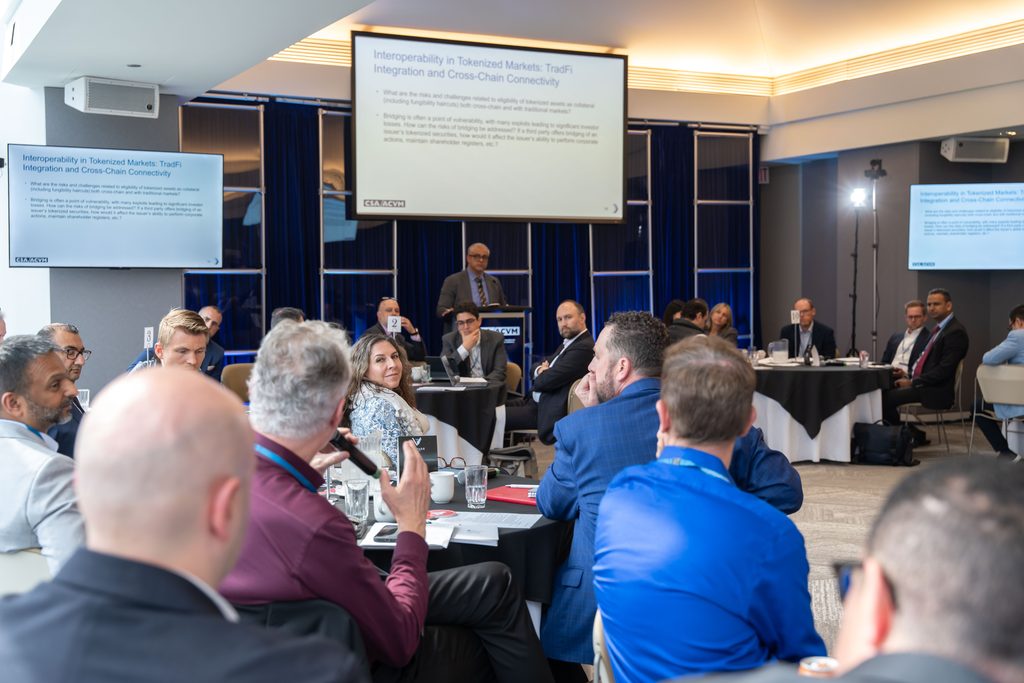
Workshops in Calgary and Toronto
Participation reflected a broad cross-section of the capital markets and Web 3 ecosystems, including:
- financial institutions,
- dealers,
- custodians,
- transfer agents,
- exchanges,
- asset managers,
- tokenization platforms,
- blockchain infrastructure providers,
- technology vendors,
- lawyers, academics,
- industry associations, and
- public-sector organizations.
Organizations represented
Calgary Workshop participants
(April 9, 2026)
66 in-person and 215 virtual
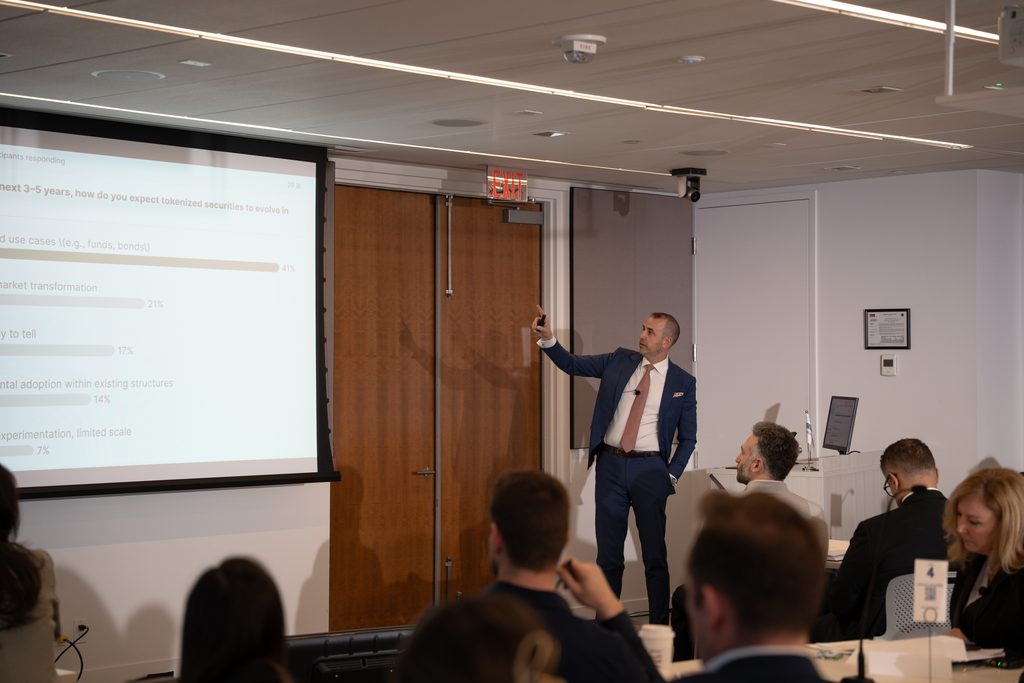
Toronto Workshop Participants
(June 11, 2026)
62 in-person and 429 virtual
Bilateral meetings
Survey responses
3. Insights and Emerging Themes
Participants provided diverse perspectives on market and regulatory considerations related to tokenization, including broader legal questions relating to taxation, property law, and insolvency law. While all stakeholder insights were considered, the CSA Collaboratory’s mandate is limited to tokenization issues that fall within the scope of securities law and securities regulation.
A. Market Development and Canadian Competitiveness
Phase 1 participants expressed a very wide range of views regarding the current state of tokenization in Canada. Some of the most divergent perspectives related to strategic priorities, including the extent to which Canada should prioritize international interoperability and alignment with global initiatives versus domestic competitiveness and innovation, and whether initial regulatory efforts should focus on institutional use cases, retail participation, or both. Participants also differed in their views on the current state of market development, with some pointing to growing commercial activity, active product development, and increasing institutional engagement, while others characterized many initiatives as exploratory and highlighted ongoing questions relating to settlement assets, legal certainty, and regulatory treatment.
A.1. Factors Affecting Market Development
Participants identified several factors that may be influencing the pace of tokenization adoption in Canada.
Participants and other stakeholders have noted that Canadian financial institutions have invested less in tokenization initiatives than some international peers. The financial sector, being highly regulated and risk-averse, will need to test tokenization innovations within controlled environments before broader adoption.
Participants also distinguished between potential benefits that appear more immediate and those that remain more speculative. Near-term benefits were more often associated with operational processes, including collateral mobility, post-trade workflows, investment fund administration, settlement coordination, and asset servicing. By contrast, broader claims about increased liquidity and retail demand were treated by some participants as less certain and dependent on market adoption, product design, and supporting infrastructure.
Participants identified limited expertise and practical experience with tokenization among both financial institutions and regulators as a barrier to adoption. They noted that additional testing and hands-on experience will help build confidence in tokenized markets while improving understanding of the associated risks.
Participants identified the availability and regulatory treatment of settlement assets as an important factor affecting tokenization adoption. Several participants noted that tokenized markets require reliable digital settlement assets to support payment and settlement functions. In this regard, participants frequently referenced the role of stablecoins, as well as other potential settlement assets such as tokenized bank deposits and wholesale CBDCs. Participants observed that uncertainty regarding the availability, regulatory treatment, and adoption of these settlement assets may influence the pace and scope of tokenization initiatives in Canada. This is discussed in greater detail in Section D.
Participants noted regulatory uncertainty, questions regarding the legal status of blockchain-based records, the treatment of tokenized assets in the event of insolvency, and the sufficiency of financial reporting and assurance frameworks as potential areas affecting the pace and direction of tokenization in Canada. These are discussed in greater detail in Section B.
A.2. Market Interest and Testing Initiatives
Participants generally supported further testing and experimentation in Canada. They viewed controlled experimentation, regulatory engagement, and observation of live or near-live pilots as important ways to build technical understanding, identify regulatory frictions, and assess whether potential efficiencies can be achieved at scale. Some participants, however, emphasized that testing should serve as a pathway to broader market implementation rather than an end state, and emphasized the importance of the development of mechanisms to support the transition from pilot projects to production use cases.
Participants frequently cited Project Samara as an important Canadian proof of concept. The project tested tokenized bond issuance, trading and settlement using DLT and tokenized wholesale Canadian dollars.
While participants viewed Project Samara as an important demonstration of the technical feasibility of tokenized capital markets infrastructure, they also noted that its limited scope left a number of practical implementation questions unresolved, including those relating to netting, liquidity management, governance, settlement finality, and scalability. Some participants observed that the project required significant time and coordination relative to its scope, reflecting the challenges of applying existing regulatory frameworks to novel tokenization use cases. Participants suggested that future initiatives may benefit from clearer regulatory pathways for engagement.
A.3. Areas of Expected Near-Term Development
Participants discussed a range of asset classes and market activities where tokenization is currently being explored and that may see near-term development in Canada. The discussion focused on use cases that have already demonstrated traction internationally, as well as capital market activities where participants believe tokenization may deliver meaningful operational benefits.
Participants identified the most commercially viable use cases as the tokenization of investment funds (particularly money market funds) and certain private market assets, together with blockchain-based applications relating to treasury and cash management and collateral management.
Tokenized fund structures were discussed across a range of investment fund types, including mutual funds (such as exchange-traded funds (ETFs) and money market funds), closed-end funds, private funds, and other structured products. Participants noted that tokenization may improve subscriptions and redemptions, streamline fund administration, improve recordkeeping, and facilitate transfers among eligible investors.
Several participants also pointed to emerging blockchain-native fund structures. These products could potentially rely on real-time market data and oracle infrastructure. Participants noted that such arrangements may enable more continuous pricing, trading, and administration. The availability, reliability, and governance of oracle infrastructure may be an important consideration in the development and operation of these models.
Participants also viewed private-market assets as areas where tokenization could potentially deliver meaningful benefits.
Private equity, private credit, real estate investments, and other traditionally illiquid assets were frequently cited as examples where tokenization may potentially improve transferability, increase operational efficiency, and broaden access to investment opportunities.
At the same time, participants noted a potential mismatch between issuer interest and investor demand. Mature private issuers that are the most likely to attract investor interest may prefer to maintain relatively concentrated ownership structures and therefore see limited value in tokenization. Conversely, for issuers that may benefit most from broader investor access, tokenization may not generate sufficient investor demand to support active markets.
Participants also acknowledged that tokenization itself may not necessarily increase access to investment opportunities or liquidity. Private-market assets, whether tokenized or not, would be limited to distribution and secondary trading pursuant to available prospectus exemptions.
Participants also discussed global developments involving tokenized public equities. International initiatives, including issuer-sponsored models (e.g., Galaxy Digital) and third-party sponsor models (e.g., xStocks and Robinhood Stock Tokens),10 were cited as evidence that tokenization of public equities is technically feasible. See Section C for more information.
However, participants generally viewed public-equity tokenization as being at an earlier stage of commercial adoption than tokenized investment funds and certain private-market assets. Several participants noted that broader adoption may depend on the development of supporting market infrastructure, settlement arrangements, distribution channels, and investor demand.
Participants frequently cited collateral management and collateral mobility as areas where tokenization may provide meaningful operational benefits in the near term. Participants noted that tokenized assets could support more efficient movement and deployment of collateral, reduce settlement frictions, and improve the speed and transparency of collateral-related processes. Several participants viewed these efficiencies as a more immediate and tangible benefit of tokenization than some broader claims relating to liquidity creation or retail market participation.
Participants also noted that broader adoption may depend on supporting market infrastructure, interoperability, and legal certainty regarding the treatment of tokenized assets used as collateral. Some participants further suggested that the use of tokenized assets as collateral may require appropriate reconciliation processes between tokenized assets and any underlying assets, participant access controls, operational safeguards, and consideration of concentration risks.
B. Regulatory, Legal and Risk Considerations
Participants identified a range of legal, regulatory, operational, and risk considerations that may influence the development of tokenization in Canada. While some of these issues fall within the scope of securities regulation, others may require coordination across market participants, policymakers, and other areas of law and regulation in Canada and internationally.
Regulatory Considerations
Many participants emphasized that tokenization is primarily intended to address operational and market infrastructure challenges, rather than alter the fundamental application of securities laws. Several participants expressed the view that tokenized products should generally operate within existing regulatory frameworks and investor protection requirements, including prospectus exemptions, resale restrictions, know-your-client obligations, and suitability requirements.
Tokenization was viewed as an evolution of existing capital markets infrastructure rather than the creation of a separate regulatory environment.
Some participants observed that existing financial market infrastructure standards, including the Principles for Financial Market Infrastructures (PFMI), are generally technology-neutral and may already address many of the legal, operational, governance, custody, collateral, and risk management considerations associated with tokenized assets and distributed ledger-based market infrastructure. These participants suggested that the focus should be on determining whether existing standards achieve the intended regulatory outcomes when applied to tokenized market infrastructure.
Legal Recognition of On-Chain Records and Ownership Rights
While blockchain records can demonstrate that a transaction has occurred, participants noted that there may be uncertainty as to whether they can be recognized as definitive legal proof of ownership, which they noted may also depend on contractual arrangements, applicable legal frameworks, corporate records, or other legally recognized evidence.
Participants observed that greater regulatory clarity may be needed regarding when a token recorded on a distributed ledger represents a legally enforceable right, how ownership is established in a tokenized environment, and whether a blockchain record or a traditional register should be treated as the authoritative record of ownership. Participants also highlighted questions relating to settlement finality, noting that a transaction that is technically final or irreversible on a blockchain may not necessarily be legally final. Some participants also questioned whether the settlement-finality protections contained in the Payment Clearing and Settlement Act would apply to blockchain-based settlement systems and other distributed ledger arrangements, or whether additional legal clarity may be required as tokenized market infrastructure evolves. Other participants expressed the view that, where a transaction has been settled and recorded on the relevant ledger, no additional formalities should be required to make the transfer enforceable against third parties. Participants further noted that legislative recognition of tokens and distributed ledger records could enhance legal certainty and facilitate legitimate transactions.
Insolvency, Collateral and Property Rights
Participants identified insolvency treatment as an area requiring further consideration. Questions were raised regarding how tokenized assets would be treated in the event of an insolvency, restructuring, or default, including whether token holders would benefit from protections typically associated with client assets or bankruptcy-remote property, or whether they would instead have only a contractual claim against an issuer, custodian, or third-party sponsor (see Section C). Participants noted that these issues may be particularly relevant where tokenized assets are used as collateral. Several observed that the effectiveness of tokenized collateral may depend not only on an asset’s market value and liquidity, but also on the certainty and enforceability of the rights associated with that collateral in an insolvency scenario.
The legal rights associated with collateral may also depend on where the collateral is legally located. If collateral is held through foreign infrastructure or in another jurisdiction, different legal protections and insolvency rules may apply.
Financial Reporting and Assurance Considerations
Participants generally viewed existing accounting and financial reporting frameworks as sufficient for current levels of tokenized asset activity, however there may be a need for a specific framework for digital assets in the future. Participants noted that tokenization raises a number of practical audit and assurance questions, including how auditors can verify ownership rights associated with tokenized assets, assess the reliability of blockchain records as audit evidence, and determine appropriate valuation methodologies for tokenized assets and related digital instruments.
Participants also observed that effective assurance may require expertise spanning financial auditing, blockchain technology, cybersecurity, software systems, and digital asset infrastructure. Some raised questions regarding auditor independence, particularly where pseudonymous blockchain activity may make it more difficult to identify potential financial interests in the assets or entities being audited.
C. Tokenized Securities/Derivatives: Structures, Ownership Rights and Regulatory Considerations
Participants generally referred to three categories of tokenized securities:
C.1. Issuer-sponsored tokenized securities
In issuer-sponsored tokenized securities, the issuer integrates blockchain technology into its system for recording ownership, such that a transfer of the token is a transfer of the security on the issuer’s official record of ownership. In these circumstances the tokenized securities constitute the issuer’s shares rather than a representation of, or claim or entitlement to, a separate underlying security. Participants discussed models where (a) the blockchain forms part of the issuer’s official record of ownership, and (b) the issuer’s off-chain register remains the authoritative record of ownership, with blockchain transfers triggering corresponding updates.
Participants noted that issuer-sponsored models could support more efficient shareholder administration and governance, including proxy voting and the processing of corporate actions. They pointed to initiatives such as Galaxy Digital’s use of Broadridge’s on-chain governance platform and Securitize’s partnership with Computershare as examples of how blockchain-based ownership records may be integrated with transfer-agent processes. Participants noted that these approaches may enhance transparency, auditability, and recordkeeping while preserving traditional shareholder rights, including dividends, voting rights, corporate actions, and issuer communications.11
Participants generally viewed issuer-sponsored structures as offering the strongest preservation of investor rights and the greatest legal certainty regarding ownership interests because the tokenized security forms part of the issuer’s ownership framework rather than representing an indirect claim on an underlying asset or security. However, participants noted that market demand for issuer-sponsored tokenization remains uncertain and pointed to limited trading activity in some existing issuer-sponsored tokenized equity offerings. Some participants also observed that a critical mass of issuers may need to adopt tokenization before these models can achieve meaningful scale.
C.2. Third-party Sponsored Custodial Tokenized Securities
Under these arrangements, a third party tokenizes a security issued by another entity. Unlike issuer-sponsored tokenized securities, investors do not hold the issuer’s securities directly. Instead, their rights arise through the contractual arrangements with the third-party sponsor.
Participants noted there are various different structures that could be used, which will determine the rights and interests of the token holder. In some cases, a special purpose vehicle (SPV) structure is utilized where the token represents a unit of an SPV that holds the underlying securities for the benefit of token holders. Depending on the structure, including whether the token provides holders with the rights and interests associated with the underlying security on a one-for-one basis and the involvement of a securities intermediary, the token may be a security entitlement or a separate security.
C.3. Third-party Sponsored Synthetic Tokenized Securities/Derivatives
Third-party sponsored synthetic tokenized securities involve a third party creating and issuing a token that provides investors with economic exposure to a reference security without conveying ownership rights in the underlying security. Unlike third-party sponsored custodial tokenized securities, which involve an intermediary holding the underlying security on behalf of investors, synthetic tokenized securities derive their value from contractual or other financial arrangements linked to the performance or value of a reference security.
Participants noted that these structures may facilitate broader distribution across jurisdictions because they do not require the underlying asset to be held for the benefit of token holders. However, participants generally viewed these structures as providing fewer rights and protections than issuer-sponsored or third-party custodial tokenized securities, because investors typically have contractual claims against the third-party sponsor rather than rights associated with ownership of, or a claim or entitlement to, the referenced asset.
C.4. Observations Across Tokenization Models
No single tokenization model emerged as a clear preferred approach with participants expecting the market to evolve with a mix of issuer-native, third-party sponsored custodial, and synthetic tokenization models. Each model serves different commercial objectives and investor needs and would be expected to coexist just as shares, depositary receipts, derivatives, and ETFs currently coexist in traditional capital markets.
Participants consistently expressed concern that retail investors may not fully understand the features and implications of different tokenization structures. Depending on the structure, investors may have: (i) limited or no voting rights, (ii) direct, indirect, or no claims on underlying assets, (iii) restricted redemption rights, or (iv) additional exposure to intermediary, custody, and operational risks. As a result, participants emphasized the importance of clear disclosure regarding token ownership arrangements, investor rights, governance, redemption mechanisms, and risks.
Some participants also suggested that concise, accessible and standardized disclosures or term sheets would be beneficial to helping investors compare tokenization structures. Participants noted that lengthy disclosure documents may be particularly ineffective for retail investors, who increasingly access investment products through digital and mobile-first platforms and may be unlikely to engage with lengthy or complex disclosures.
Participants also discussed that third-party sponsor models typically do not involve the authorization of the issuer of the underlying or referenced security. Participants noted that different third parties may independently create different tokenized representations of the same issuer’s securities. As a result, investors may trade different tokenized versions of the same issuer’s securities on separate platforms or across different ecosystems, each with its own liquidity and market activity. Participants observed that this could result in differences in liquidity and pricing between tokenized versions of the same issuer’s securities, as well as create operational challenges, investor confusion, and reputational and other concerns for issuers that have not authorized the tokens.
D. Tokenization’s Impact on Trading, Settlement, and Market Infrastructure
D.1. Settlement Models and Settlement Infrastructure
Participants generally viewed the greatest potential value of tokenization as arising not from the digitization of assets, but from the further digitization and automation of market infrastructure. DLT has the potential to streamline issuance, trading, custody, settlement, recordkeeping, and asset servicing activities by consolidating these functions within a shared digital infrastructure. Participants noted that a common, tamper-resistant ledger12 could serve as a shared source of truth for ownership, issuance, and collateral transfers, reducing reliance on separate recordkeeping systems and reconciliation processes while enhancing transparency, efficiency, ownership verification, and auditability.
Some participants identified atomic settlement as a potential benefit of tokenized market infrastructure. Atomic settlement ensures that the transfer of an asset and payment occur simultaneously, meaning a transaction settles only when both parties can fulfil their obligations. While atomic settlement may enable faster settlement, participants generally viewed its primary benefits as improving settlement certainty and finality, and reducing settlement, counterparty, and principal risk. They also observed that atomic settlement could lessen reliance on aspects of the intermediary-driven post-trade infrastructure that support traditional T+1 and T+2 settlement cycles.
Participants also noted that atomic settlement may involve important trade-offs. While simultaneous settlement can reduce counterparty and settlement risk, it may also reduce some of the efficiencies associated with traditional settlement and netting arrangements. If transactions must be pre-funded on a gross basis, market participants may need to hold more cash or highly liquid assets to meet settlement obligations as they occur, potentially increasing their need for cash or other funding and reducing liquidity efficiency. Participants questioned whether tokenized settlement systems could ultimately achieve the same level of efficiency as existing netting-based wholesale settlement systems when operating at scale.
Participants further emphasized that atomic settlement is only one potential settlement model for tokenized markets. Other approaches include hybrid models that combine blockchain-based asset records with traditional payment and settlement infrastructure, and off-chain settlement processes that use blockchain technology primarily for recording or mirroring transactions. Institutional transactions may also be settled through in-kind transfers rather than cash payments.
Participants noted that fully on-chain atomic settlement requires both an asset leg and a cash leg to exist on the same ledger or interoperable infrastructure. Potential forms of tokenized cash discussed included tokenized bank deposits, wholesale CBDCs, and stablecoins.
Views differed on the preferred settlement asset, as well as on the viability of supporting a diversity of settlement assets. Participants observed that the boundary between stablecoins and certain tokenized money market fund products may become increasingly blurred where both are used as cash-equivalent settlement instruments. Some participants also raised concerns about the competitiveness and sovereignty implications of relying on U.S. dollar-denominated settlement assets, noting that this could increase dependence on foreign infrastructure and reduce the role of Canadian dollar-based settlement solutions in domestic capital markets. It was consistently noted that a lack of clarity regarding the allocation of regulatory oversight of settlement assets among the CSA, the Bank of Canada, and the Office of the Superintendent of Financial Institutions remains a significant barrier to the development of tokenization in Canadian capital markets.
D.2. Market Structure, Trading and Intermediation
Trading Venues for Tokenized Assets
Participants noted that tokenization may expand the range of venues through which securities can be traded.
Participants identified three broad venue models13:
- Centralized marketplaces, including exchanges, ATSs and crypto-asset trading platforms, may already have the infrastructure to support tokenized assets. Many participants viewed these as the most likely starting point for institutional adoption.
- Decentralized trading protocols and exchanges (DEXs), which may facilitate peer-to-peer on-chain trading and interoperability with blockchain-based applications but would still require compliance controls, including transfer restrictions and investor verification, for tokenized securities.
- OTC dealer-facilitated trading, which may be particularly suitable for bonds, private securities, and other less-liquid assets.
Intermediation Rather Than Disintermediation
Although tokenization is frequently associated with disintermediation, participants generally rejected the notion that intermediaries would disappear. While some clearing, settlement, and brokerage functions may become more automated as their activities evolve, participants generally expected existing intermediaries to continue to serve an important role in compliance and investor protection. The role of the transfer agent was also expected to persist but evolve.
Instead of disappearing, participants expected new types of intermediaries to emerge that may not fit neatly within existing regulatory categories, such as tokenization agents (entities that mint/burn tokens and, where there is an underlying off-chain asset, maintain the “link” between the token and its underlying off-chain asset), blockchain infrastructure providers (entities that develop smart contracts or settlement networks, or enable multi-chain token movement), and wallet providers. Any regulatory adaptations will need to consider how, whether, and the extent to which its regulation will apply to these actors or their activities.
Permissioned and Permissionless Networks
Participants discussed the use of both permissioned and permissionless blockchains. Permissioned networks were generally viewed as more practical for regulated market activity because controlled participation can support identity verification, compliance obligations, and governance arrangements, while enabling greater accountability through identifiable participants and auditable transaction records. By contrast, participants noted that fully permissionless networks may present greater challenges relating to identify verification, KYC and anti-money laundering (AML) measures, the implementation of governance frameworks, and regulatory oversight generally.
Some participants challenged this view and emphasized the key benefits of DLT arise from permissionless blockchain networks. These participants highlighted hybrid models in which regulated applications operate on a permissionless base-layer network while implementing permissioned access controls at higher layers of the technology stack. Under this approach, regulatory requirements and oversight would be directed primarily at the applications and access-control mechanisms rather than at the underlying blockchain infrastructure.14
Liquidity Fragmentation and Price Discovery
Participants identified liquidity fragmentation as a significant concern. The same underlying asset may be tokenized through multiple structures and traded across different networks and venues. Absent sufficient interoperability and the ability of participants to arbitrage price differences across those networks and venues, economically equivalent assets could trade at persistent price differentials. Fragmentation may also impair price discovery by dispersing trading activity across networks and venues, making it more difficult for investors and intermediaries to identify the best available price, particularly where consolidated market data is unavailable.
More broadly, participants emphasized that liquidity is critical to the success of tokenized markets. Several described a “bootstrapping problem,” in which investors and market makers may be reluctant to participate until sufficient liquidity develops, while liquidity itself depends on the participation of investors and market makers.
Participants also discussed the role that arbitrageurs and liquidity providers may play in maintaining price alignment across tokenized and traditional markets but also in decentralized systems. While some participants expressed confidence that arbitrage mechanisms would emerge as tokenized markets mature, others questioned whether sufficient liquidity and robust price discovery would be available during periods of market stress or when underlying assets traded infrequently.
Participants further observed that supporting infrastructure, including reliable oracle services may play an important role in the development of efficient tokenized markets. They noted that arbitrage, valuation, collateral management, and other market functions may depend on the timely and accurate availability of external market data. As a result, participants suggested that the quality, resilience, and governance of oracle infrastructure may influence price discovery, market efficiency, and the ability of tokenized markets to maintain alignment with traditional markets.
24/7 Trading and Continuous Markets
Participants discussed the potential for tokenization and blockchain-based infrastructure to support continuous, 24/7 trading. Several noted that demand for extended-hour trading is increasing and observed that some tokenized asset platforms and DeFi markets already operate on a near-continuous basis. Participants identified increased investor access and flexibility as a potential benefit, particularly for investors who are unable to trade during traditional market hours.
At the same time, participants expressed differing views regarding the implications of 24/7 trading for price discovery and investor outcomes. Some questioned whether assets whose underlying reference markets are closed, or whose underlying assets are not continuously traded or valued, can support reliable pricing and effective arbitrage around the clock. Investment funds were frequently cited as a potential example where tensions may arise between continuous trading and the ability to accurately value underlying assets.
Other participants argued that these challenges may diminish as more assets, settlement systems, and market infrastructures become tokenized and capable of supporting continuous trading, settlement, and valuation. Participants also noted that key market functions, including collateral management, funding processes, and aspects of post-trade infrastructure, continue to operate primarily during conventional business hours. Overall, while many viewed expanded trading hours as a natural evolution of market infrastructure, others emphasized the difficulty of providing greater market access while maintaining sufficient liquidity, valuation, price discovery, and investor protection.
D.3. Custody and Asset Safeguarding
Participants noted digital self-custody as an attractive element of DLT to those seeking portability and control over their assets. However, given the relative popularity of centralized platforms that provide custodial services for crypto assets, many participants expected investors to continue to prefer managed or regulated custody solutions for tokenized assets. Participants generally viewed self-custody as shifting certain risk from custodians and other intermediaries to investors themselves, rather than eliminating those risks altogether.
Participants identified several key safeguarding issues:
- Control over wallets holding tokenized assets and the allocation of authority among investors, custodians, dealers, transfer agents, and other intermediaries.
- Private key management, including how keys are stored, protected, recovered, and administered.
- Segregation of client assets from the assets of custodians, platforms, dealers, and issuers, particularly in insolvency scenarios.
D.4. Market Integrity, Surveillance, and Enforcement
Participants noted that blockchain transparency may enhance market surveillance and investigative capabilities in certain respects, but may not, on its own, be sufficient for enforcement purposes. For example, wallet addresses are often pseudonymous, and certain technologies and practices can obscure transaction flows and counterparties. Participants also observed that public blockchain transparency may expose sensitive information and create privacy or security risks.
Participants recognized that enforcement bodies would need enhanced surveillance and investigative capabilities to enforce existing rules in DLT environments. These capabilities may include blockchain analytics expertise and specialized software for wallet-to-identity mapping, beneficial ownership tracing, cross-chain and cross-venue surveillance, oracle monitoring, and smart contract event monitoring.
Participants identified a number of market integrity risks that may be unique to, or amplified by, tokenized markets. These included transaction-ordering abuses arising from blockchain transaction sequencing, manipulation of oracles relied upon by smart contracts, and challenges associated with monitoring trading activity, ownership records, and settlement activity across multiple blockchain networks and trading venues. Participants emphasized that effective oversight and enforcement would require the ability to connect trading activity, settlement activity, ownership records, and participant identities across venues and blockchain networks. Several participants noted that existing data-sharing and privacy requirements may make it challenging to achieve this level of visibility.
D.5. Operational, Technology and Governance Challenges
Smart Contracts and Oracles
Participants viewed programmability through smart contracts as one of tokenization’s most significant benefits. At the same time, participants noted that smart contracts introduce new operational risks, including coding errors, software vulnerabilities, inadequate testing or oversight, governance failures, and unintended outcomes. Participants emphasized that these risks may have faster and broader effects than in traditional systems, particularly where smart contracts perform critical market functions automatically. Effective oversight and auditing of smart contract-based activities may require specialized technical expertise and capabilities that are less mature than those available in traditional financial markets.
Participants also highlighted risks associated with the use of oracles that rely on external data feeds. Questions were raised regarding liability attribution when inaccurate, manipulated, or unavailable oracle data causes investor harm or market disruption. Ensuring the accuracy and reliability of information transmitted through oracles may depend on third parties that operate outside the direct control of regulators and market participants.
Interoperability, Reconciliation, and Governance
Participants identified interoperability between traditional financial systems and tokenized systems as a significant practical challenge. Effective interoperability requires coordination across custody, settlement, data, and ownership-record systems and depends on maintaining a clear and authoritative record of ownership. Participants also emphasized the importance of understanding how blockchain-based systems would integrate with existing market infrastructure, including the Canadian Depository for Securities.
Reconciliation between blockchain records, custodian records, bank balances, administrator records, and official ownership registers was viewed as critical. Participants stressed the need for reconciliation policies and procedures to effectively address discrepancies, system outages, failed transfers, and competing ownership claims.
Governance was another recurring theme. Participants noted that interoperability and reconciliation challenges raise broader questions regarding responsibility for operating tokenized market infrastructure, maintaining authoritative ownership records, overseeing ledger governance, and implementing protocol changes. Participants expressed divergent views on how these functions should be governed and who should be held accountable when operational issues arise.
Auditability and Assurance
Participants raised questions about the scope of audit and assurance activities in tokenized markets. In addition to financial statements, participants suggested that assurance may need to extend to smart contract code, cybersecurity controls, governance arrangements, ownership records, and the operation of key technology infrastructure. Participants also observed that auditors with expertise spanning financial audit, information technology, blockchain protocols, and cybersecurity remain relatively uncommon, and that widely accepted standards and methodologies for auditing smart contracts are still developing.
Participants highlighted the importance, for auditability purposes, of maintaining traceability between on-chain tokens and underlying assets, documenting the functionality and governance of smart contracts, maintaining effective operational and security controls, and reassessing smart contracts following material code changes. Participants also noted the importance of controls surrounding oracle data and other external inputs relied upon by smart contracts.
Decentralized Finance (DeFi): Opportunities, Integration Models, and Regulatory Considerations
E.1. Potential Benefits and Functionality of Defi Infrastructure
Participants identified several characteristics of DeFi infrastructure that may support innovation in financial markets.
DeFi systems can use smart contracts to embed rules and functionalities directly into assets and transaction processes, including transfer restrictions, compliance requirements, corporate actions, and settlement terms. Smart contracts can also automate the execution of transactions and other functions when predefined conditions are met, reducing manual intervention and potentially improving operational efficiency.
DeFi applications are often built on, or can interact with, shared blockchain infrastructure and incorporate common technical standards. This supports interoperability across a growing selection of applications and products, and allows financial functions such as lending, borrowing, collateral management, and trading to be combined and reused across multiple applications. While many participants viewed composability as a significant benefit, they noted it may also create novel oversight challenges by increasing interconnectedness and enabling the same assets to be reused across multiple transactions and applications.
DeFi infrastructure may allow users to access financial services and interact directly with blockchain-based applications, reducing reliance on certain traditional intermediaries. This may enable financial functions such as lending, borrowing, and trading to be conducted through decentralized protocols rather than conventional intermediated structures.
E.2. Integration of DeFi into Regulated Markets
Participants discussed how DeFi infrastructure could be incorporated into regulated capital markets. Rather than permitting unrestricted access, many participants favoured controlled-access or permissioned models in which access to underlying peer-to-peer protocols would be limited to approved participants and verified wallets.
Under this approach, onboarding, KYC processes, compliance monitoring, and access controls would be managed through a regulated front-end service that provides access to the underlying protocol.
Participants viewed this type of model as a potential way of combining the technological benefits of DeFi infrastructure while maintaining compatibility with existing regulatory safeguards. Several participants emphasized that this would likely involve the selective adoption of certain DeFi components, such as settlement, token transfers, and certain liquidity mechanisms, rather than wholesale adoption of all DeFi features, some of which may not be appropriate for regulated markets.
E.3. DeFi Risks and Regulatory Considerations
Participants identified various risks and regulatory considerations associated with DeFi.
Participants expressed concern that DeFi arrangements may weaken or undermine traditional oversight mechanisms and investor protections. Regulated intermediaries play an important role in providing oversight, accountability, and investor protection, and reducing reliance on these intermediaries or removing them may weaken existing layers of supervision and control. Participants also raised concerns regarding accountability and liability where responsibility for operational failures, misconduct, or investor harm may be difficult to attribute.
Participants noted that automation and reliance on code are often presented as a means of reducing the need for intermediaries and manual intervention. However, questions remain regarding who exercises control over protocol operations and changes, how decisions are made, and who bears responsibility when issues arise in systems that do not have a clearly identifiable operator.
Participants highlighted risks associated with smart contract vulnerabilities, protocol failures, oracle failures, cybersecurity incidents, and cross-chain bridge infrastructure. They also noted that failures can be irreversible and immediate, and reliance on automated code may reduce opportunities for human oversight, intervention, and discretionary judgement when unexpected events occur.
Participants raised concerns that liquidity may become fragmented across multiple protocols and trading venues, potentially resulting in thin or volatile markets and pricing inefficiencies. Some participants also noted that decentralized trading environments may have weaker mechanisms for price discovery and market stability than traditional exchanges, which could affect the efficiency and resilience of trading activity.
Given these risks, participants generally supported an activity-based approach to regulation under which regulatory requirements apply based on the function being performed, such as custody, trading, settlement, onboarding, or access control, regardless of the technology used (i.e. adopt a technology neutral approach). Participants noted that entities responsible for KYC, participant onboarding, or access controls within a DeFi arrangement should remain subject to regulatory oversight. At the same time, some cautioned that overly restrictive requirements could encourage activity to migrate to offshore or decentralized platforms operating outside the reach of domestic regulators.
4. Project Tokenization: Phase 2
From Exploration to Practical Engagement
Phase 1 revealed significant interest in continued regulatory engagement on tokenization and practical pathways to move tokenization initiatives from concept to implementation. Participants generaPhase 2 revealed significant interest in continued regulatory engagement on tokenization and practical pathways to move tokenization initiatives from concept to implementation. Participants generally supported testing and experimentation as tools to build practical experience and address regulatory questions. They emphasized the importance of pathways that allow viable initiatives to progress beyond pilots or individual regulatory decisions. Participants also noted that as tokenization initiatives continue to develop rapidly in jurisdictions outside of Canada, efficient and predictable regulatory engagement may influence both innovation and the competitiveness of Canadian capital markets.
Building on the findings from Phase 1, the CSA will launch Phase 2 of Project Tokenization through a public call for proposals in 2026. Over a 120-day period, the CSA will invite proposal submissions from firms developing tokenization-related products, services, infrastructure, and business models relevant to Canadian capital markets.
The objectives of Phase 2 are to:
- provide market participants with an opportunity to present specific tokenization initiatives;
- identify potential and available regulatory pathways for tokenization initiatives;
- generate practical evidence and regulatory learning;
- deepen the CSA’s understanding of emerging tokenization models and their implications for Canadian capital markets;
- inform whether further guidance, policy development, regulatory coordination, testing, or other action may be warranted; and,
- support the responsible development of tokenized capital markets in Canada.
Phase 2 will provide a structured mechanism for engagement while preserving flexibility to support market-ready initiatives.

Developing Pathways for Tokenization Initiatives
Proposals will be assessed based on factors such as their relevance to Phase 2 objectives, the regulatory issues raised, their potential to generate broader regulatory learning, the level of industry involvement and their stage of development.
Depending on the nature and maturity of an initiative, further engagement may involve additional legal, policy or technical analysis before an appropriate pathway can be identified. Potential pathways may include:
- existing regulatory frameworks and processes;
- bounded testing in a controlled environment;
- tailored regulatory approaches; or
- other forms of regulatory engagement.
The role of bounded testing
Bounded tests are controlled regulatory pathway for testing innovative capital market activities on an appropriate scale and for a defined period, subject to defined parameters, safeguards, reporting requirements, and decision points.
By generating practical evidence in a controlled environment, bounded tests help the CSA and market participants better understand how innovative products, services and business models operate in practice, as well as any regulatory and investor protection considerations. The results can support regulatory learning, inform evidence-based decision-making, and whether, and under what conditions, an activity may be suitable for broader implementation. The structured design promotes consistency, transparency, and opportunities for shared learning across participants and CSA members.
If the CSA determines that a Phase 2 proposal has broader application and warrants further exploration, we may develop a bounded participation framework for a particular business model.
Submitting a proposal in Project Tokenization Phase 2 does not guarantee that a bounded participation framework will be developed based on that proposal. More broadly, the CSA is developing bounded testing capabilities for other areas of innovation and will share more information in 2027.
Phase 2 is intended to create a clearer path from regulatory questions to practical action. It will provide flexibility for tokenization initiatives to develop while enabling the CSA to build practical regulatory experience and maintain appropriate investor protection, market integrity and risk safeguards.
Glossary
Key Terms and Concepts
The terms below are included to facilitate understanding of the issues that are addressed in this Phase 1 Project Tokenization report.
Atomic Settlement
Atomic settlement refers to the ability to complete a set of linked actions as a single, indivisible transaction, such that either all actions occur or none occur. The mechanism relates to the conditional linkage of the actions and does not, in itself, require immediate or real-time settlement. In financial markets, the term is commonly used to describe distributed ledger technology’s (DLT) ability to settle the asset leg and the corresponding payment leg of a transaction as a single, indivisible transaction. Potential cash legs include tokenized bank deposits, wholesale central bank money (wholesale CBDCs), and stablecoins each of which have different legal, regulatory, credit and liquidity characteristics.
Blockchain-Native
Blockchain-native refers to an asset, instrument, application, or system that originates, is recorded, and operates directly on a blockchain, rather than representing something that exists primarily outside the blockchain or serving merely as an interface to an external process or system. Blockchain-native arrangements typically rely on smart contracts, DLT, and on-chain data and workflows as core components of their operation.
Central Bank Digital Currency (CBDC)
A central bank digital currency is a digital form of central bank money issued as a liability of a central bank. A wholesale CBDC is generally designed for use by eligible financial institutions in payment and settlement activities rather than for general public use.
Composability
Composability refers to the ability of applications, smart contracts, assets, or protocols to interact with and build on one another. It can allow financial functions to be combined or reused across multiple blockchain-based applications.
Distributed Ledger Technology (DLT)
Distributed ledger technology refers to systems that record, share, and synchronize transactions or other data across multiple computers or network participants. Records are maintained according to agreed technological processes, which may include mechanisms for validating transactions and updating the ledger. Blockchain is one form of DLT, but not all distributed ledgers use a blockchain structure.
DeFi generally refers to financial services enabled through DLT and smart contracts. DeFi systems can facilitate automated and peer-to-peer activities such as trading, lending, borrowing, and collateral management. The term is used to describe a broad range of arrangements that vary in their degree of decentralization. Some seek to minimize centralized control and rely primarily on smart contracts and distributed governance mechanisms, while others depend on identifiable entities, such as developers, governance bodies, front-end operators, infrastructure providers, or access-control mechanisms, to operate.
Interoperability
Interoperability refers to the ability of different systems, networks, applications, or market infrastructures to exchange information or assets and operate together. In tokenized markets, this may include interaction among different distributed ledgers and between distributed-ledger systems and traditional financial-market infrastructure.
On-Chain and Off-Chain
On-chain refers to transactions, records, assets, or processes that occur or are maintained on a blockchain. Off-chain refers to transactions, records, assets, or processes that occur or are maintained outside the blockchain. The corresponding terms on-ledger and off-ledger may be used where the relevant distributed ledger does not use a blockchain structure.
Oracles
An oracle is a service that delivers external market and reference data, such as asset prices, interest rates, corporate actions, or other real-world information, to blockchain applications and smart contracts. Oracles enable tokenized assets and smart contracts to operate using information that is not recorded on the blockchain itself
Permissioned and Permissionless Blockchains
Permissioned blockchains restrict certain network functions, such as transaction validation, governance activities, access to network data, or application deployment, to approved participants. Permissionless blockchains allow participants to perform network functions in accordance with the protocol’s rules without requiring approval from a central authority. Many current institutional models combine permissionless infrastructure as a base layer (generally known as L1) with permissioned applications, governance frameworks, or access controls built on top.
Private and Public Blockchains
Private blockchains restrict network access and participation to approved users (permissioned), while public blockchains are generally open to anyone wishing to access and participate in the network (permissionless).
Security Entitlement
A security entitlement generally refers to the rights and property interest of an entitlement holder in a financial asset held through a securities intermediary. The nature and extent of those rights are determined by applicable securities transfer legislation and the relevant account and custodial arrangements.
Smart contracts are software applications deployed on a distributed ledger that execute predefined actions when specified conditions are met. They can be programmed to automate many aspects of a transaction, including compliance checks, information verification, asset transfers, servicing functions, and other processes that are traditionally performed manually.
A crypto asset intended or designed to maintain a stable value relative to the value of a fiat currency. A stablecoin may attempt to maintain its value by maintaining a reserve of highly liquid assets in the reference currency, or other means such as algorithmic supply and demand mechanisms. Stablecoins are a subset of “value-referenced crypto assets”, a term used by CSA staff in various CSA publications and decisions.
Tokenization
Tokenization is the process of creating a unique digital identifier (token) on a blockchain or other distributed ledger that represents or embodies an asset, right, obligation or other interest.
Tokenized Asset
A tokenized asset is an asset, right, obligation, or other interest that is represented or embodied by a token recorded on a blockchain or other distributed ledger. The legal rights and interests associated with a tokenized asset depend on its structure and the applicable contractual and legal arrangements.
Tokenized Bank Deposit
A tokenized bank deposit is a digital representation of a deposit liability of a regulated deposit-taking institution recorded on a blockchain or other distributed ledger. It represents a claim against the institution and is distinct from a stablecoin or central bank digital currency.
Tokenized Collateral
Tokenized collateral is an asset or interest represented or embodied by a token and provided to secure an obligation. Its effectiveness as collateral depends on factors that may include the legal rights represented by the token, ownership and control arrangements, valuation, liquidity, transferability, and enforceability in an insolvency or default.
Tokenized Security
A tokenized security is a security represented or embodied by a token recorded on a blockchain or other distributed ledger. Depending on its structure, the token may constitute the security itself, represent a security entitlement, or provide economic exposure to a referenced security without conveying ownership of it.
Wallet
A digital wallet is a software or hardware tool used to manage the cryptographic keys or credentials that enable a user to access, control, or transfer digital assets. Control of a wallet or its private keys does not necessarily establish legal ownership of the assets associated with it.
Web3
Generally, refers to blockchain-based applications, services, and ecosystems that use distributed ledger technology, smart contracts, and digital assets to enable decentralized forms of ownership, governance, and value transfer. The Web3 ecosystem may include blockchain infrastructure providers, decentralized applications (commonly referred to as dApps), DeFi protocols, digital asset service providers, and other organizations that develop, facilitate or use blockchain-based technology.
Questions
Please refer your questions to any of the following:
British Columbia Securities Commission
Catherine Tearoe
Senior Legal Counsel, Capital Markets Regulation
ctearoe@bcsc.bc.ca
Anton Lunyov
Legal Counsel, Capital Markets Regulation
alunyov@bcsc.bc.ca
Ian Fong (he/his)
Legal Counsel, Legal Services, Corporate Finance
ifong@bcsc.bc.ca
Alberta Securities Commission
Mohamed Zohiri
Legal Counsel and FinTech Adviser, Advanced Research and Knowledge Management (ARKM)
Mohamed.Zohiri@asc.ca
Ryan Clements
Director, Advanced Research & Knowledge Management
Ryan.Clements@asc.ca
Autorité des marchés financiers
Nicole Truong
Senior Policy Analyst, Asset Management Policy and Technological Innovation
Nicole.Truong@lautorite.qc.ca
Arina Qendro
Corporate Finance Analyst, Corporate Finance Oversight
Arina.qendro@lautorite.qc.ca
Financial and Consumer Services Commission of New Brunswick
Jake Calder
Manager of Policy, Securities
Jake.Calder@fcnb.ca
Manitoba Securities Commission
Chris Besko
Executive Director
chris.besko@gov.mb.ca
Financial and Consumer Affairs Authority of Saskatchewan
Caroline Smith
Senior Legal Counsel, Securities Division
caroline.smith@gov.sk.ca
Nova Scotia Securities Commission
Peter Lamey
Legal Analyst, Corporate Finance
peter.lamey@novascotia.ca
Ontario Securities Commission
Amanda Ramkissoon
Senior Legal Counsel, Office of Economic Growth and Innovation
aramkissoon@osc.ca
Gloria Tsang
Senior Legal Counsel, Trading and Markets Division
gtsang@osc.ca
- Market participants include a broad range of organizations and individuals involved in capital markets, such as issuers, investors, investment dealers, exempt market dealers, portfolio managers, investment fund managers, custodians, marketplaces and trading venues, clearing and settlement providers, transfer agents, financial institutions, and other service providers involved in the issuance, trading, custody, settlement, or administration of securities ↩︎
- The BC Securities Commission (BCSC) is not publishing this report at this time due to publication restrictions related to the B.C. provincial election. Staff of the BCSC anticipate publishing this report at a later date. ↩︎
- Market participants, policymakers, and industry observers have identified tokenization as an area of growing interest and market development: McKinsey & Company, From Ripples to Waves: The Transformational Power of Tokenizing Assets (20 June 2024) online: <https://www.mckinsey.com/industries/financial-services/our-insights/from-ripples-to-waves-the-transformational-power-of-tokenizing-assets>; Examples include: financial institutions, such as BlackRock,“BlackRock Launches its First Tokenized Fund, BUIDL, on a Public Blockchain” (20 March 2024), online: <https://www.businesswire.com/news/home/20240320771318/en/BlackRock-Launches-Its-First-Tokenized-Fund-BUIDL-on-the-Ethereum-Network>; market infrastructure providers, such as Euroclear, “Euroclear launches DLT solution for the issuance of digital securities” (24 October 2023), online: Euroclear <https://www.euroclear.com/newsandinsights/en/press/2023/2023-mr-14-euroclear-launches-dlt-solution.html>; crypto asset trading platforms (CTPs), such as Robinhood, “Robinhood Launches Stock Tokens”, online: <https://robinhood.com/us/en/newsroom/robinhood-launches-stock-tokens-reveals-layer-2-blockchain-and-expands-crypto-suite-in-eu-and-us-with-perpetual-futures-and-staking/>; technology firms, such as Coinbase Asset Management, “Coinbase and Coinbase Asset Management Announce Project Diamond”, online: <https://www.coinbase.com/en-ca/blog/coinbase-and-coinbase-asset-management-announce-project-diamond-a-smart>; regulators, such as the Financial Conduct Authority, “Digital Securities Sandbox (DSS)”, online:<https://www.fca.org.uk/firms/innovation/digital-securities-sandbox>; and policymakers, such as the Monetary Authority of Singapore, “Project Guardian”, online: <https://www.mas.gov.sg/schemes-and-initiatives/project-guardian>. ↩︎
- Markets in Crypto-Assets Regulation (MiCA), Regulation (EU) 2023/1114, [2023] OJ L 150/40. <https://eur-lex.europa.eu/eli/reg/2023/1114/oj/eng> ↩︎
- SIX Group,“Digital Assets Services”, online: SIX <https://www.six-group.com/en/products-services/securities-services/digital-assets.html>. ↩︎
- Bank of Canada, Digital currencies and fintech: projects. <https://www.bankofcanada.ca/research/digital-currencies-and-fintech/projects/>. ↩︎
- Bank of International Settlements, “Project Agorá: Exploring tokenization of cross-border payments” (27 May 2026) <https://www.bis.org/project/agora> ↩︎
- Bank of Canada, “Bank of Canada, Export Development Canada, RBC and TD Successfully Complete Bond Issuance Experiment Using Distributed Ledger Technology” (5 March 2026), online: Bank of Canada <https://www.bankofcanada.ca/2026/03/bank-canada-export-development-canada-rbc-td-successfully-complete-bond-issuance-experiment-distributed-ledger-technology/>; See: Project Samara OSC Decision Order (In the Matter of RBC Dominion Securities Inc.), 2 March 2026, online: <https://www.osc.ca/sites/default/files/2026-03/ord_20260302_project-samara.pdf>; See also: Project Samara Research Paper, Bank of Canada Staff Analytical Paper 2026-8 (March 2026), online: <https://www.bankofcanada.ca/wp-content/uploads/2026/03/sap2026-8.pdf>. ↩︎
- https://www.mckinsey.com/industries/financial-services/our-insights/from-ripples-to-waves-the-transformational-power-of-tokenizing-assets?ref=blog.tokenizer.estate, https://www.bcg.com/publications/2022/relevance-of-on-chain-asset-tokenization ↩︎
- Galaxy Digital,“Galaxy and Superstate Launch GLXY Tokenized Public Shares on Solana” (3 September 2025), online: Galaxy Newsroom <https://www.galaxy.com/newsroom/galaxy-superstate-launch-glxy-tokenized-public-shares>; Backed Assets (JE) Limited,“Product Legal Overview”, online: xStocks Docs <https://docs.xstocks.fi/docs/product-legal-overview >; xStocks, “xStocks: Tokenized Equities”, online: xStocks <https://xstocks.com/>; Robinhood, “Stock Tokens”, online: Robinhood Chain Documentation <https://docs.robinhood.com/chain/stock-tokens/>; Robinhood Markets, Inc,“Robinhood Launches Stock Tokens, Reveals Layer 2 Blockchain, and Expands Crypto Suite in EU and US with Perpetual Futures and Staking” (30 June 2025), online: Nasdaq <https://www.nasdaq.com/press-release/robinhood-launches-stock-tokens-reveals-layer-2-blockchain-and-expands-crypto-suite>. ↩︎
- See: Galaxy Digital Holdings Ltd.,“Galaxy and Broadridge Bring Proxy Voting On-Chain for Tokenized Equities” (6 April 2026), online: Broadridge <https://www.broadridge.com/press-release/2026/broadridge-live-with-on-chain-governance> and Securitize Partners with Computershare to Tokenize U.S. Stocks, Wall Street Journal (29 April 2026), online: Wall Street Journal <http://www.wsj.com/livecoverage/fed-interest-rate-decision-earnings-04-29-2026/card/securitize-partners-with-computershare-to-tokenize-u-s-stocks-WNIMzlSDS7gHPjX8KMtK> ↩︎
- Participants noted that, once a transaction achieves technical finality on a distributed ledger, the original transaction record generally remains immutable. Where an error occurs, the economic effect may instead be addressed through a separate reversing, offsetting, or adjusting transaction. This implications from this, including client reporting and taxes, would need to be considered by firms. ↩︎
- Tokenized securities may also be transferred directly between wallets without an exchange, ATS, dealer, or other intermediary facilitating the transaction. While such bilateral wallet-to-wallet transfers are not generally considered a trading venue, they may represent an additional mechanism through which tokenized securities can be transferred between participants, subject to applicable legal and regulatory requirements. ↩︎
- This approach was noted as being analogous to the internet, where regulatory obligations are generally applied to the services and activities operating on the network rather than to the underlying protocols. Similarly, oversight could focus on the applications and access-control mechanisms built on a permissionless blockchain rather than on the blockchain infrastructure itself. ↩︎